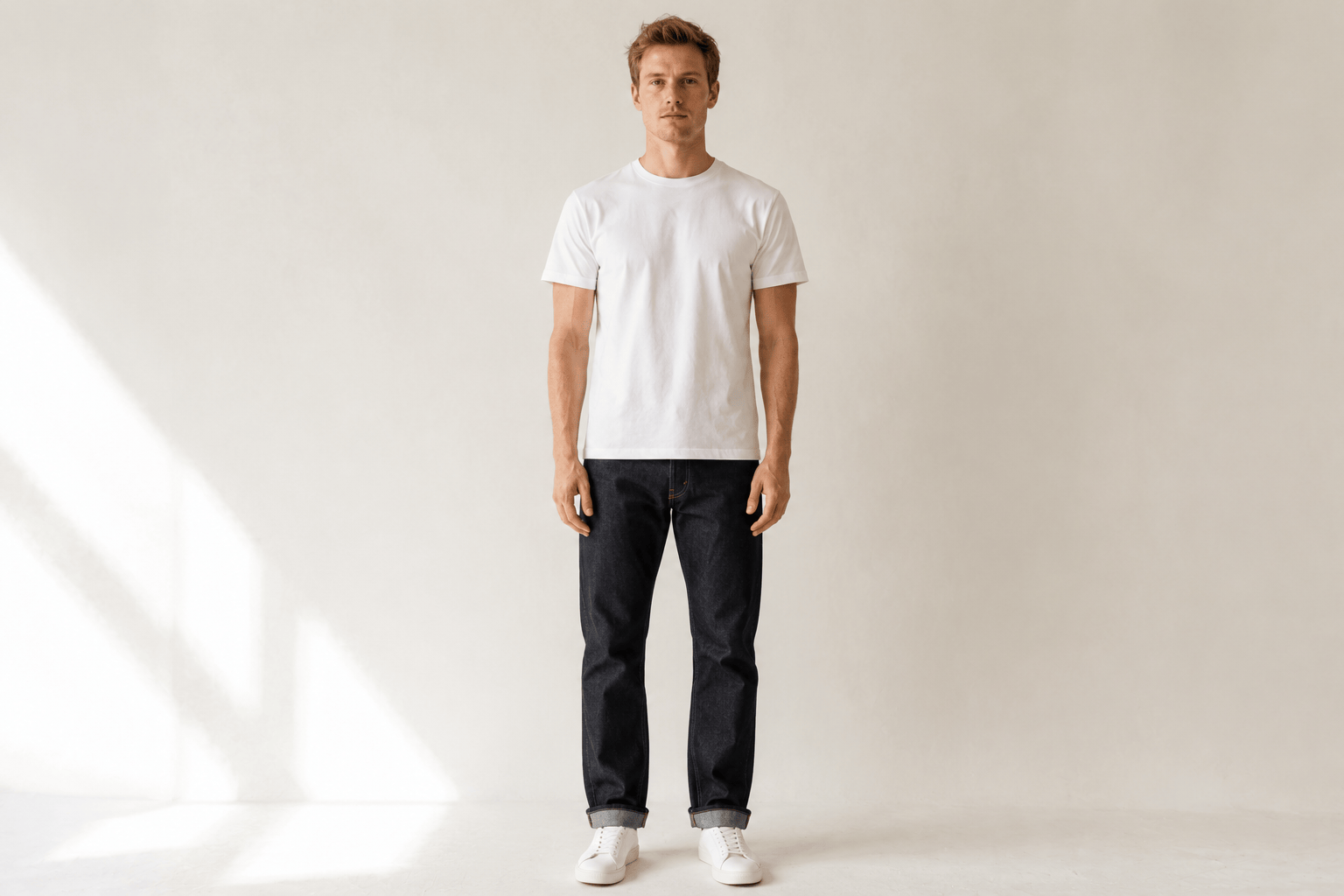
Trend
The case for unbranded basics
A logo is the cheapest part of any garment. The argument for spending the same money on construction, fit, and fabric instead.
By Fetchi Editorial
5 min read
There has been a slow correction underway across menswear and womenswear for the last five years. The peak-logomania era of the late 2010s, where a hoodie's worth was largely a function of how visible the brand was on the front of it, has been quietly winding down. The shift is partly cyclical (every excess produces its own backlash) and partly economic (the ratio of logo to construction in a $400 t-shirt eventually becomes hard to defend). What replaces it is a more interesting argument about basics.

The argument is straightforward. A logo is the cheapest part of any garment. The expensive parts are the fabric, the cut, and the construction. If you remove the logo - or buy from a brand that does not use one prominently - the same dollar can go further on the parts that actually wear. That is the case for unbranded basics, and it is unusually persuasive at this price point.
What unbranded means in practice
Unbranded does not mean unbranded literally. Most of the brands that win in this category have logos; they just do not put them on the outside of the garment. Permanent Style covers this distinction extensively in its menswear coverage; the same dynamic plays out on the womenswear side, which The Cut and Harper's Bazaar have written about as the "quiet luxury" extension of the same idea (we covered the broader category in our quiet luxury brands roundup).
The pieces this argument is strongest about are also the most-worn ones in any wardrobe: the white t-shirt, the cashmere crewneck, the wool trousers, the cotton button-down, the basic tote bag. Each of these is something you wear weekly. Each of these is also something where construction quality is immediately visible and a logo adds nothing.
What to actually look for
On t-shirts: a 240-280g GSM cotton, with reinforced shoulder seams and a clean neckline that doesn't twist after washing. On knits: 100% merino or cashmere (or a high-percentage blend), with a clean rib at the collar and cuffs. On trousers: a wool or wool-blend in the 280-340g weight range, with a half-canvas waistband and pocket bags that don't see through. None of these specs depend on a logo. All of them depend on the brand caring about the construction details.
T-shirts and basics in stock right now, sorted cheapest first:
- Loading
-50%
Men's DAILYSZN Marler T-Shirt
From Finish Line$30.00$15.00 - Loading
-67%
- Loading
-67%
- Loading
 -74%
-74% - Loading
-50%
- Loading
-67%
- Loading
 -77%
-77% - Loading
-40%
- Loading
 -74%
-74% - Loading
-61%
- Loading
- Loading
-67%

Where unbranded fails
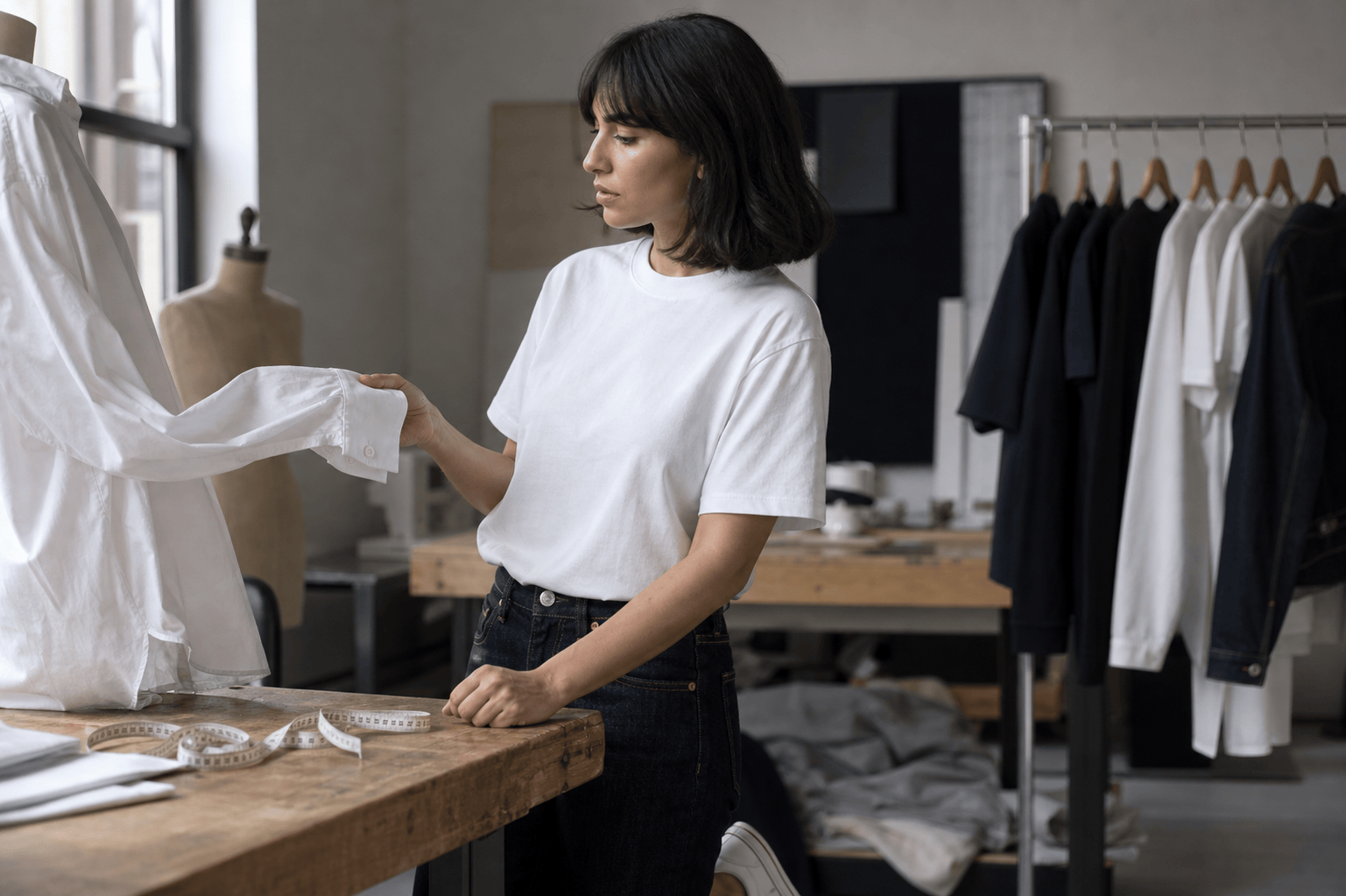
The argument breaks down at the cheapest end of the market. A $20 t-shirt is a $20 t-shirt regardless of who makes it; the construction details that make a $120 t-shirt worth the price simply are not present at the lower price. The category that benefits most from unbranded thinking is the middle: $80-300 for a t-shirt, $200-600 for a knit, $300-700 for trousers. Below that, the logo is doing real work in signaling production standards. Above that, the production standards are usually so good that the logo is the cheapest possible signal.
A logo is the cheapest part of any garment. The expensive parts are the fabric, the cut, and the construction.
How this fits in a real wardrobe
The principle works best when applied to the foundation pieces - the things you wear under and beside everything else. We laid out the foundation in our spring 2026 capsule wardrobe, and the Toronto summer essentials list extends the same logic into city-specific seasons. The accent pieces - the statement coat, the unusual bag, the standout knit - are the ones where logos and signature design language actually earn their price. The basics are the ones where they are mostly noise.
Business of Fashion has been tracking the financial implications of this shift across the major luxury houses; the short version is that pure-logo categories are losing share faster than craft-led categories. The Guardian's fashion vertical and Wikipedia's capsule wardrobe entry cover the consumer-side version of the same dynamic.
Where to actually shop
Our t-shirt and shirt index carries the bulk of the menswear basics market across our retailers, and on the womenswear side tops and knitwear are the cleanest cross-shopping views. The menswear sweaters category sits next to the t-shirts as the second most-impactful basics buy. Use the price-ascending sort to surface the value end of each tier.
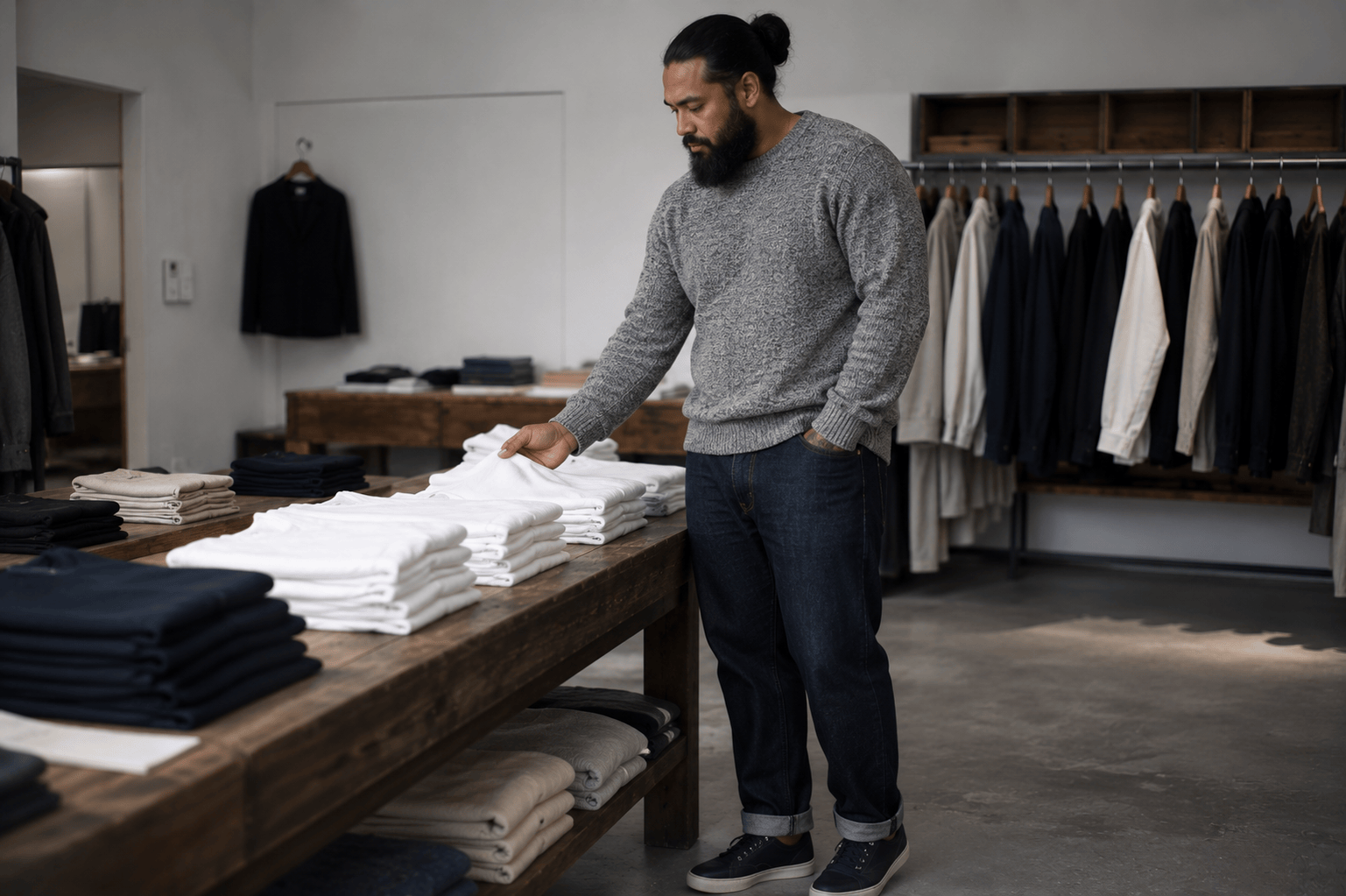
Unbranded does not mean uninteresting. The brands that win at this argument are the ones whose work shows up in the texture, the seam, the way a knit drapes after the third wear. None of that is visible in a small online photo, which is why brand reputation still matters - but the reputation worth paying attention to is the one built on construction details, not the one built on a chest logo.
Frequently asked
- At what price do unbranded basics actually beat branded ones?
- Eighty to three hundred dollars for t-shirts, two to six hundred for knits, three to seven hundred for trousers. Below that, the logo is doing real signaling work; above, the construction is so good that a logo adds nothing. Cross-shop the menswear t-shirts and womenswear tops for current stock.
- How can I judge quality without trying it on?
- Spec the GSM weight (cotton 240 to 280g for tees), look for reinforced shoulder seams and clean necklines, and check material composition. 100 percent natural fibers usually beats blends at the basics tier. Browse the products catalogue for current pieces.
- Are Uniqlo and other mass-market basics good enough?
- For under-fifty-dollar purposes yes. Once you are spending eighty plus, the construction quality of dedicated basics labels (Asket, Sunspel, Buck Mason) usually beats mass-market. Cross-shop the menswear sweaters and womenswear knitwear for the upper tier.
- What basic should I upgrade first?
- The white t-shirt. You wear it weekly and the construction differences are immediately visible. A 120-dollar 240gsm tee outlasts five 25-dollar ones. Cross-shop the menswear t-shirts and womenswear tops for current stock.
More from Fetchi
Related reading
Trend
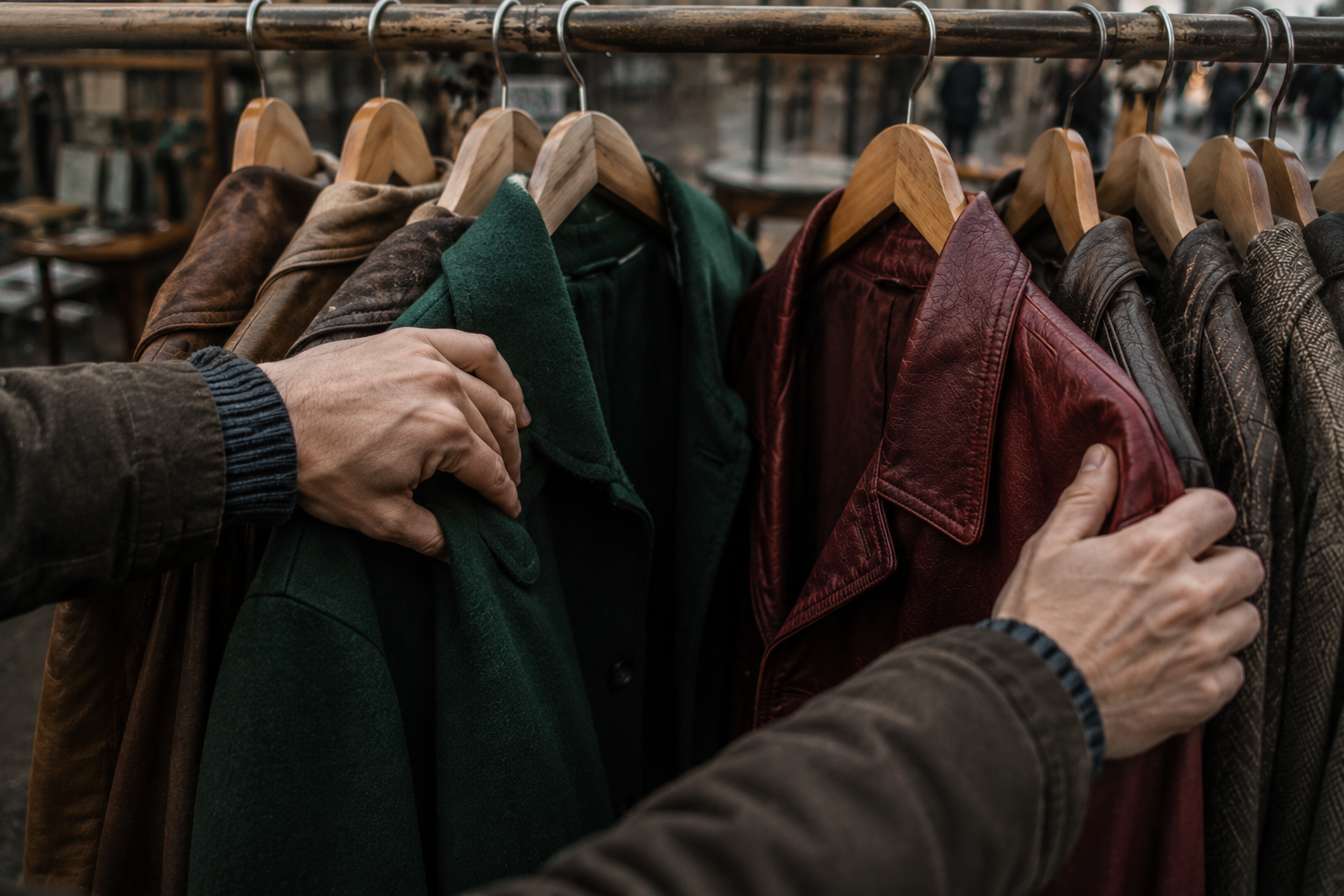
The case for buying vintage in 2026
Construction has quietly degraded across the contemporary tier. The argument for spending the same money on archival pieces that already proved they last.
Read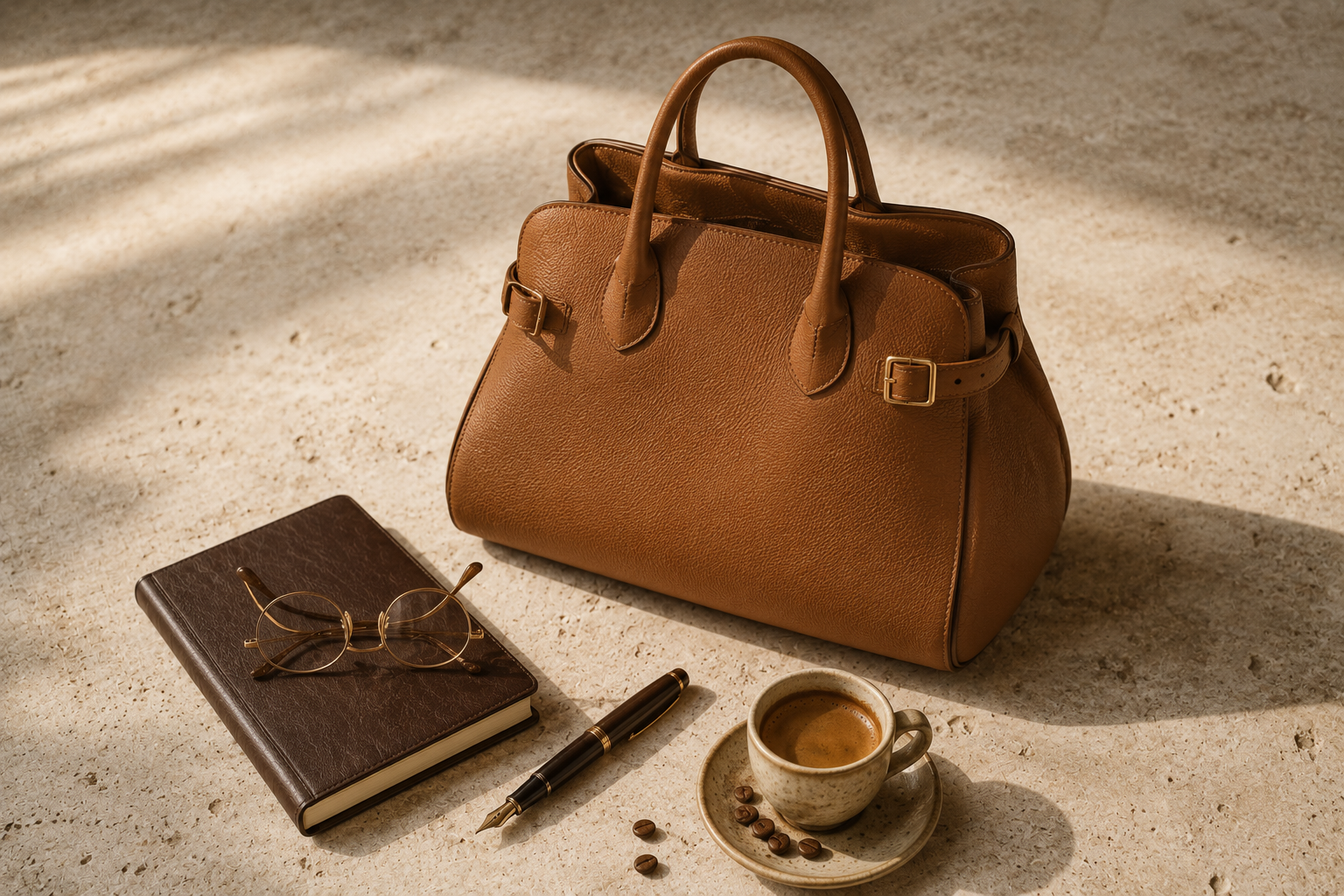
Trend
The case for a single good handbag in 2026
A bag rotation is a strategy from another era. Here is why one well-chosen piece outperforms five at a third of the cumulative spend.
Read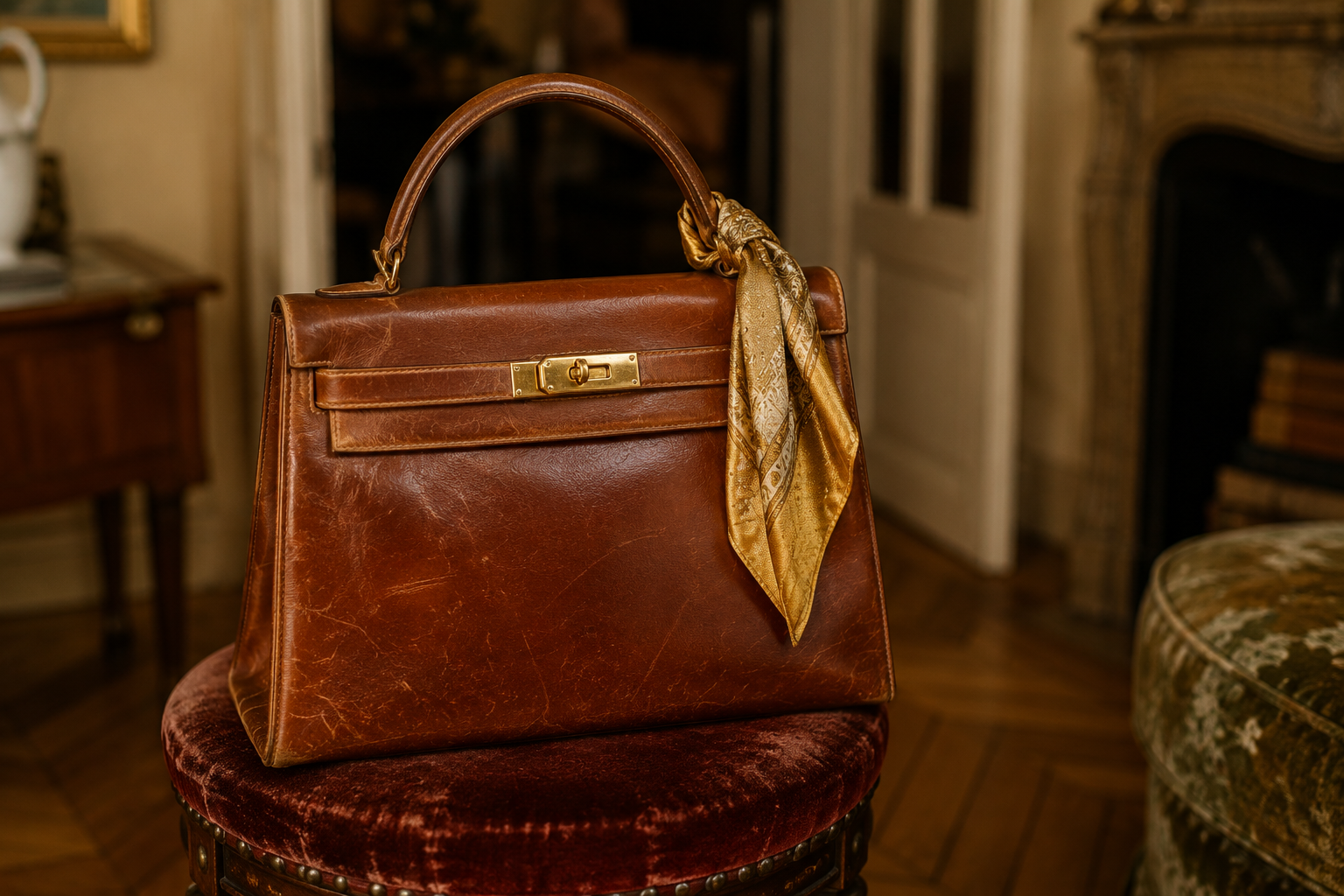
Trend
The case for buying second-hand luxury bags in 2026
Pre-owned is the only register where the math on a $4,000 bag actually pencils. A buyer guide to the houses, the platforms, and the tells.
Read